Category: Material&Craftsmanship

  • Laminated Acetate Eyewear: Design & Manufacturing Challenges

    Laminated Acetate Eyewear: Design & Manufacturing Challenges

    Explore how laminated acetate creates distinctive eyewear designs through different layer thicknesses, colors, and patterns, and how Cenming Eyewear manages shrinkage, color symmetry, and manufacturing challenges to improve production consistency.

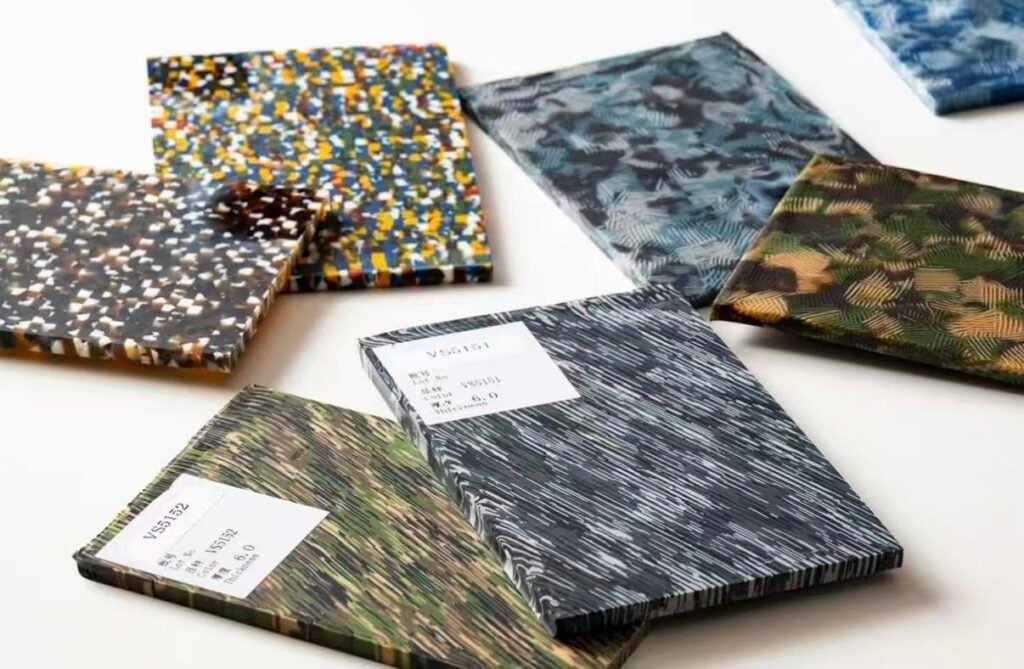
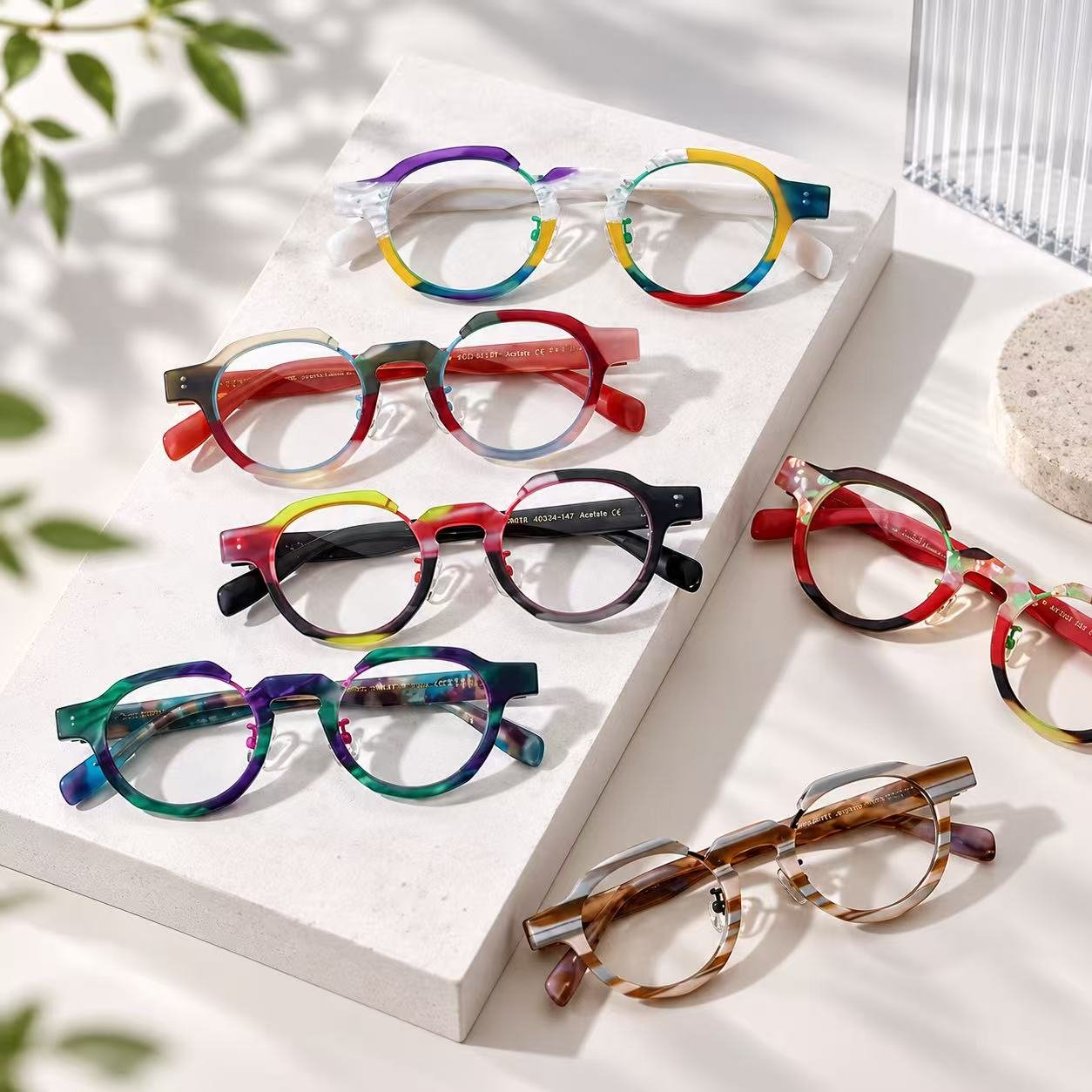
    Laminated acetate offers eyewear brands greater freedom to explore colors, patterns, and visual depth. By combining different acetate layers, we can create contrasting edges, translucent effects, and distinctive frame designs.

    However, producing high-quality laminated acetate eyewear requires more than selecting attractive materials. Layer thickness, color distribution, shrinkage control, CNC machining, and polishing all influence the final appearance.

    At Cenming Eyewear, we focus on these details to help independent brands balance creative design with manufacturing consistency.

    1. Design Possibilities: Layer Thickness, Colors & Patterns

    One of the main advantages of laminated acetate is the ability to combine different visual effects within a single frame.

    Depending on material availability and construction, we can explore:

    • Layer thickness: Different proportions of colored layers to create subtle or bold contrasts.
    • Color combinations: Transparent, translucent, and opaque layers for greater visual depth.
    • Patterns and textures: Tortoiseshell, marbled effects, and irregular color distributions.
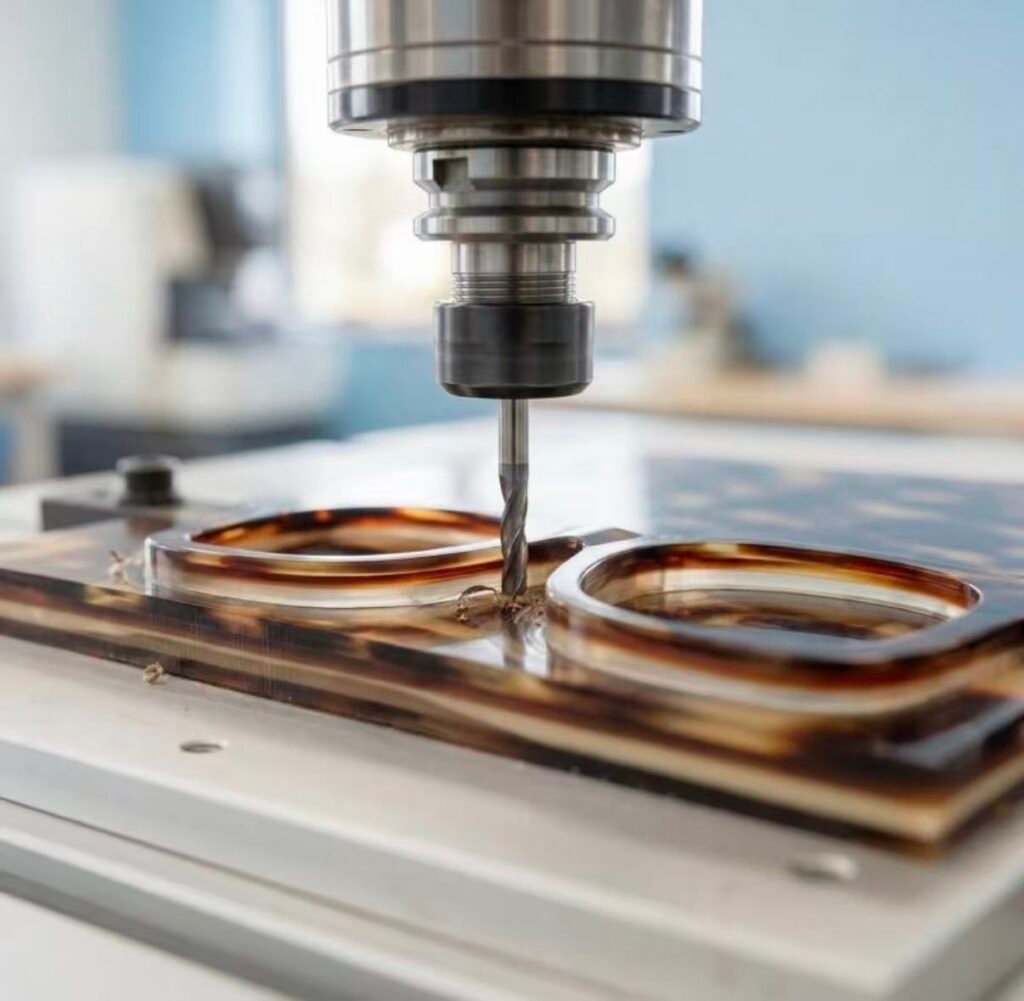
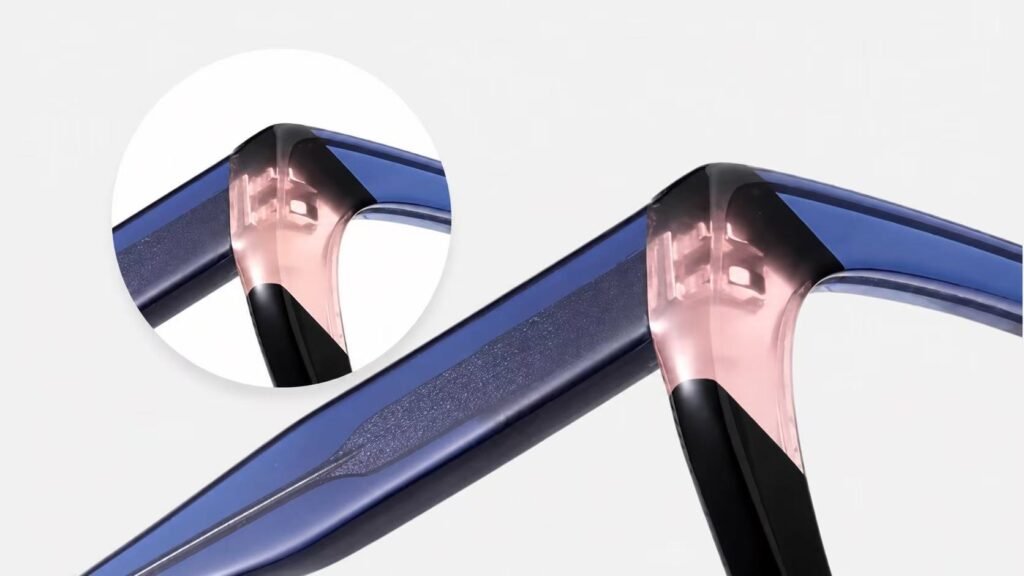
    • Sculpted details: CNC-cut bevels and contours that reveal different layers from different angles.

    The thickness and positioning of each layer determine how the colors appear after machining.

    Not every combination is technically feasible. We evaluate material construction, overall frame thickness, and machining requirements before confirming a design.

    2. Manufacturing Challenges & Quality Control

    Laminated acetate can create distinctive designs, but maintaining consistent results requires careful control throughout production.

    Shrinkage Control & Color Symmetry

    Achieving balanced color distribution on both sides of a laminated acetate frame involves more than precise cutting.

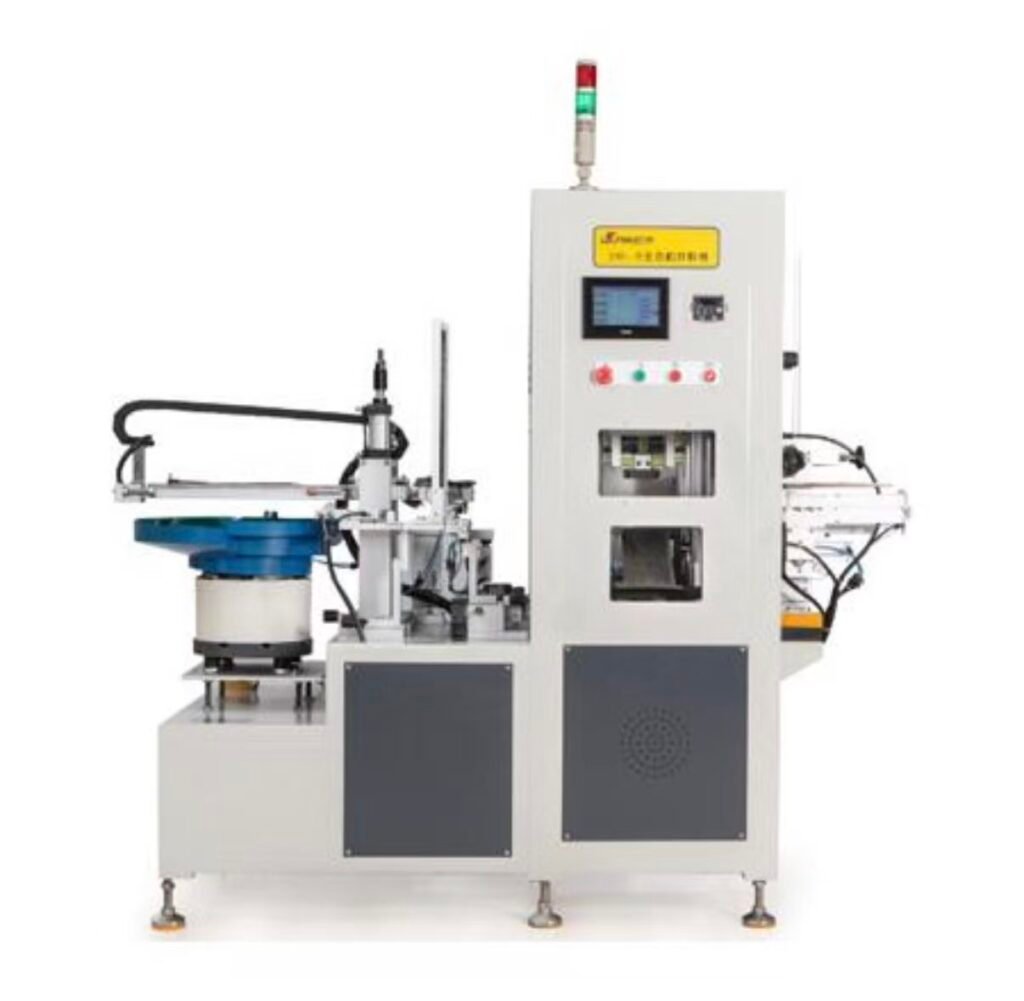
    Automated material bonding equipment and carefully manage material shrinkage and stabilization time to help improve color symmetry and consistency between the left and right sides.

    By considering these factors before machining, we aim to reduce uneven color exposure and maintain a more balanced appearance in finished frames.
    Bonding & Layer Stability

    Depending on the material construction, potential issues include visible bonding gaps, weak adhesion, or layer separation.

    We consider material compatibility, processing requirements, and inspection standards to help identify and reduce these risks.

    CNC Machining & Layer Exposure

    Cutting depth, bevel angles, and material positioning can affect how different acetate layers appear on the finished frame.

    We review frame geometry and machining requirements to help maintain consistent color transitions, dimensions, and structural details.

    Polishing & Dimensional Stability

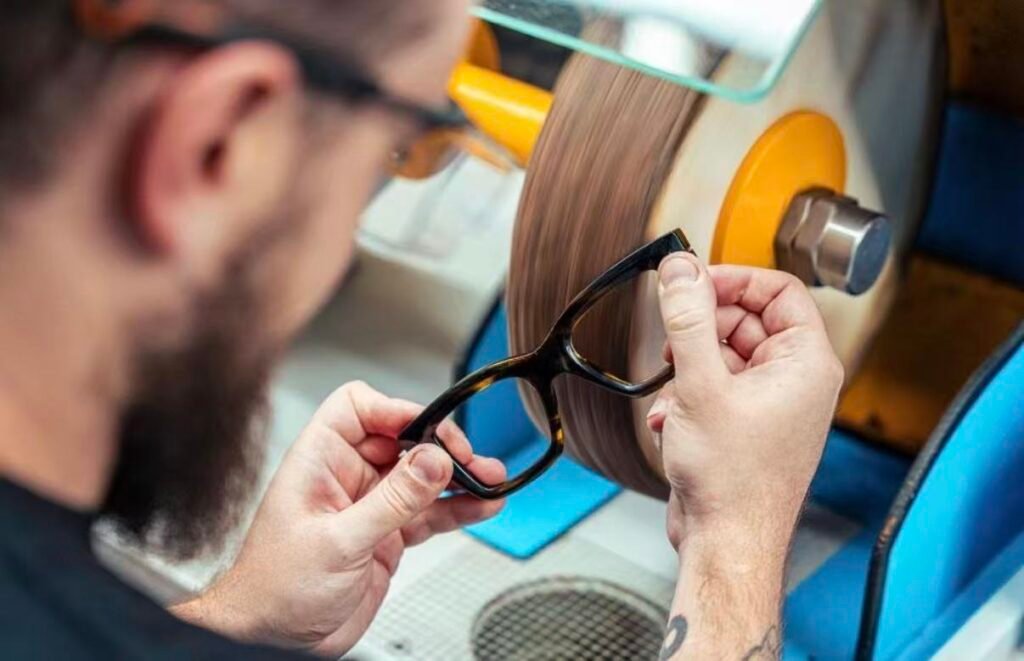
    Polishing enhances the visual depth of laminated acetate, but excessive material removal may alter visible layer proportions or soften sculpted edges.

    Heating, shaping, and machining may also affect acetate dimensions.

    Through controlled processing and inspection, we aim to preserve the intended contours, surface finish, and dimensional consistency.

    3. Managing Natural Pattern Variation

    Not every laminated acetate frame will display exactly the same decorative pattern.

    Depending on the selected material, variations in color distribution, transparency, or irregular patterns may be part of the intended design.

    The key is distinguishing acceptable aesthetic variation from manufacturing inconsistency.

    Elements we aim to keep consistent:

    • Frame shape and dimensions
    • Lens positioning
    • Hinge type and alignment
    • Structural construction
    • Approved finishing standards

    Elements that may vary within agreed limits:

    • Decorative pattern distribution
    • Irregular veins or swirls
    • Color transitions in patterned materials

    During sampling, we discuss these expectations with our clients to establish clear reference standards before production.
    4. From Design Concept to Production

    At Cenming Eyewear, we consider both visual expectations and manufacturing feasibility when developing laminated acetate frames.

    Our work includes:

    • Reviewing material options, layer thickness, and color combinations
    • Evaluating material shrinkage and stabilization requirements
    • Planning CNC machining and layer positioning
    • Identifying potential bonding, deformation, and finishing risks
    • Checking sample appearance, dimensions, and construction
    • Establishing practical quality standards before production

    Rather than promising identical decorative patterns on every frame, we focus on controlling the manufacturing factors that affect quality, color symmetry, and consistency.

    Early communication about material selection and expected visual effects helps us reduce unnecessary revisions during development.

    FAQs

    Can laminated acetate be customized with different layer thicknesses?

    Yes, depending on material availability and manufacturing feasibility. We review layer proportions alongside the required frame thickness and structure.

    How do you improve color symmetry in laminated acetate frames?

    We use automated material bonding equipment and manage material shrinkage and stabilization time. Combined with material positioning, CNC machining, and inspection, these measures help improve color symmetry between the left and right sides.

    Will every laminated acetate frame have the same pattern?

    Not necessarily. Patterned materials may show natural visual variation. We work with clients to define acceptable differences while maintaining consistent dimensions and construction.

    What are the main manufacturing risks?

    Potential concerns include uneven color exposure, bonding defects, layer separation, deformation, and changes in edge definition during polishing.

    Is laminated acetate suitable for small-batch eyewear production?

    It can be, particularly when suitable laminated sheets are available. Custom material development may involve additional minimum quantities and lead times.

    Final Thoughts

    Laminated acetate allows eyewear brands to create distinctive designs through layered colors, patterns, and three-dimensional effects.

    The challenge is maintaining the intended appearance while ensuring reliable manufacturing quality.

    At Cenming Eyewear, we focus on material selection, shrinkage control, CNC precision, polishing, and quality inspection to help turn creative concepts into production-ready frames.

    Developing a Custom Laminated Acetate Collection?

    We support independent eyewear brands with OEM and ODM development, material selection, and manufacturing.

    Contact us to discuss your design and production requirements.

  • Why Not All Acetate Eyewear Frames Are Created Equal

    Why Not All Acetate Eyewear Frames Are Created Equal

    Acetate has long been a popular material for premium optical frames and sunglasses. Its rich colors, distinctive patterns, and versatility in frame design make it particularly attractive to independent eyewear brands.

    However, not all acetate eyewear frames are created equal.

    Two frames may look similar and both be described as acetate, yet differ significantly in material consistency, structural stability, finishing quality, and manufacturing cost.

    For eyewear brands developing a new collection, understanding these differences can help them make better sourcing decisions, evaluate samples more effectively, and avoid unnecessary production issues.

    So, what really determines acetate eyewear quality?

    1. Acetate Quality Starts with Material Selection

    Acetate is a cellulose-based material commonly used in eyewear manufacturing. It is available in a wide range of colors, patterns, transparencies, and sheet constructions.

    Different acetate suppliers and material grades may offer different characteristics in terms of color consistency, processing behavior, dimensional stability, and available design options.

    For example, established suppliers such as Mazzucchelli and Takiron offer extensive acetate collections. Other qualified suppliers may also provide suitable materials depending on the project’s requirements.

    However, choosing a recognized material supplier does not automatically guarantee a well-made frame.

    Material quality is only the starting point. How the material is processed, assembled, and finished also matters.

    What eyewear brands should consider:

    • Is the specified acetate material available consistently for repeat orders?
    • Are the required colors and patterns suitable for the frame design?
    • Is the material thickness appropriate for the intended structure?
    • Are there any special processing considerations?
    • Can the manufacturer confirm the material specification and sourcing requirements?

    For brands planning long-term collections, material consistency is especially important when producing repeat orders or extending an existing product line.

    2. CNC Machining: More Than Cutting a Frame Shape

    One of the advantages of acetate is its flexibility in design.

    Unlike many injection-molded frames, acetate frames can be machined from sheets or blocks, allowing manufacturers to create customized outlines, bevels, contours, and decorative details.

    However, the quality of CNC machining affects much more than appearance.

    It can influence:

    • Frame dimensions and symmetry
    • Lens groove accuracy
    • Bridge and nose-area geometry
    • Hinge installation positions
    • Edge profiles and surface transitions
    • Consistency between left and right sides

    Complex frame designs may require additional machining operations, different cutting strategies, or more advanced equipment.

    For example, a frame with deep sculptural contours or multi-angle surfaces may require more processing than a conventional flat-front design.

    For eyewear brands, the key question is not simply whether a manufacturer can produce the shape, but whether the design can be reproduced consistently during mass production.

    A visually attractive prototype is valuable, but repeatability is equally important.

    3. Polishing: Where Appearance Meets Precision

    Polishing is one of the most visible aspects of acetate eyewear craftsmanship.

    A well-finished acetate frame should have smooth edges, consistent surface transitions, and a finish appropriate to the intended design.

    High-gloss frames require careful finishing to achieve a clean, reflective appearance. Matte or textured finishes require different controls to maintain their intended surface characteristics.

    However, polishing is not simply about making a frame look shiny.

    Excessive or inconsistent material removal can affect:

    • Edge definition
    • Frame thickness
    • Decorative contours
    • Symmetry
    • Fit between assembled components

    This is particularly important for frames with sharp design lines, laminated details, or complex three-dimensional surfaces.

    A good polishing process should enhance the design without compromising the frame’s intended geometry.

    When evaluating samples, brands should examine not only the front surface but also the inner edges, bridge area, end pieces, and other less visible sections.

    These details often reveal more about finishing consistency than a single product photograph.

    4. Rivets, Hinges, and Structural Stability

    The connection between the frame front and temples is another important consideration in acetate eyewear quality.

    Depending on the design, acetate frames may use functional rivets, decorative rivets, embedded hinges, or other fastening structures.

    These components serve different purposes.

    Functional rivets can contribute to securing a hinge assembly, while decorative rivets are primarily used to create a particular visual appearance.

    Regardless of the construction method, proper positioning and assembly are essential.

    Manufacturers need to consider:

    • Hinge positioning and alignment
    • Rivet or fastening stability
    • Suitable material thickness around connection points
    • Consistency of temple opening and closing
    • Left-right symmetry
    • Long-term structural performance

    Even a beautifully polished frame can create problems if the hinge assembly is poorly aligned or unstable.

    For independent eyewear brands, these details deserve attention during sample evaluation, particularly when developing distinctive hinge or temple designs.

    5. Why Acetate Frames May Change Shape Over Time

    Acetate is a material that responds to temperature, moisture, processing conditions, and mechanical stress.

    Like other eyewear materials, its dimensional behavior must be considered during product development and manufacturing.

    Potential concerns include:

    • Changes in frame curvature
    • Temple alignment variations
    • Lens fitting issues
    • Dimensional changes after processing
    • Deformation under unsuitable storage or environmental conditions

    These outcomes depend on multiple factors, including material selection, frame geometry, manufacturing methods, and conditions of use.

    A manufacturer should therefore assess the complete frame structure rather than relying on material specifications alone.

    For brands developing unusually thin, oversized, or highly sculptural acetate frames, early technical review is particularly valuable.

    The objective is to balance design intent, wearer comfort, and production feasibility.

    6. How to Evaluate Acetate Eyewear Samples

    When reviewing acetate frame samples, appearance should be only one part of the evaluation.

    A practical sample assessment should include the following areas:

    Inspection AreaWhat to Check
    MaterialColor, pattern, transparency, visible defects
    Frame geometryDimensions, symmetry, bridge shape, curvature
    Surface finishingPolishing consistency, edge smoothness, unwanted marks
    Hinges and rivetsAlignment, assembly stability, opening and closing
    Lens fittingGroove or mounting accuracy, secure lens installation
    Temple alignmentLeft-right consistency and frame balance
    Overall workmanshipConsistency with approved drawings and specifications

    Brands should also clarify whether the sample represents the intended production materials and manufacturing methods.

    For example, a 3D-printed prototype can be useful for evaluating shape and proportions, but it cannot fully represent the surface finish, material behavior, or structural performance of a finished acetate production sample.

    Understanding the purpose and limitations of each sampling stage helps prevent unrealistic expectations.

    7. What Should Brands Ask Their Acetate Eyewear Manufacturer?

    Before confirming a new acetate eyewear project, brands can ask several practical questions:

    1. Which acetate materials are available for our design?

    Ask about material suppliers, colors, thicknesses, and any limitations affecting the intended structure.

    2. Can our design be manufactured consistently?

    A technical review should identify potential challenges before tooling, sampling, or production begins.

    3. Which parts of the design may require adjustment?

    Frame thickness, hinge positions, lens grooves, and complex surface details may need refinement for manufacturing feasibility.

    4. How will sample quality be evaluated?

    Clarify the agreed dimensions, appearance requirements, structural checks, and approval process.

    5. What can be customized?

    Depending on the project, customization may include frame shape, acetate colors, dimensions, hinges, rivets, lens options, logos, and packaging.

    6. How will repeat-order consistency be managed?

    For growing eyewear brands, maintaining consistent specifications across future production batches is just as important as approving the first sample.

    8. Our Approach to Acetate Eyewear Manufacturing

    At Cenming Eyewear, we work with independent eyewear brands on OEM and ODM frame development and manufacturing.

    Our acetate eyewear projects may involve material selection, CNC machining, structural review, polishing, hinge and rivet assembly, and quality inspection.

    We believe that successful frame development requires more than reproducing a design visually.

    Material characteristics, structural feasibility, finishing requirements, and production consistency should all be considered throughout the development process.

    For brands with completed technical drawings, we can review manufacturing requirements and discuss potential adjustments where necessary.

    For brands working from sketches, references, or early concepts, our ODM development process can help translate design ideas into more practical manufacturing specifications.

    Our goal is to support the intended design while considering the realities of production.

    FAQs

    Is acetate better than plastic for eyewear?

    Acetate is itself a type of plastic material. In eyewear, the term is commonly used to distinguish cellulose acetate frames from other materials such as TR90 or injection-molded plastics.

    The most suitable choice depends on design, weight, flexibility, appearance, production method, and budget.

    Does more expensive acetate always mean better eyewear quality?

    Not necessarily. Material selection influences cost and performance, but machining, assembly, polishing, and quality control also contribute to the final result.

    A premium material alone does not guarantee a premium finished frame.

    Can acetate eyewear frames be customized?

    Yes. Acetate is well suited to many custom frame designs.

    Options may include frame outlines, dimensions, colors, laminated constructions, decorative details, hinges, and surface finishes, subject to technical feasibility.

    Why do some acetate frames deform?

    Dimensional changes may be influenced by material characteristics, frame geometry, manufacturing processes, temperature, storage conditions, or mechanical stress.

    A proper assessment should consider the complete product rather than attributing deformation to a single factor.

    What is the difference between a prototype and a production sample?

    A prototype may be used to evaluate shape, proportions, or selected structural features.

    A production-representative sample is intended to more closely reflect the specified materials, construction, finishing, and manufacturing process.

    What should an eyewear brand prioritize when selecting an acetate frame manufacturer?

    Beyond pricing, brands should consider material sourcing, engineering support, sample evaluation, manufacturing consistency, quality control, communication, and the manufacturer’s ability to support future production requirements.

    Final Thoughts

    Acetate eyewear quality is the result of multiple decisions, not just the material name printed on a specification sheet.

    Material selection, CNC machining, polishing, structural assembly, and quality control all influence how a frame looks, fits, and performs.

    For independent eyewear brands, understanding these factors can lead to more informed supplier discussions and more realistic product development decisions.

    If you are developing a custom acetate eyewear collection, explore our OEM Eyewear Manufacturing and ODM Eyewear Development services, or contact Cenming Eyewear to discuss your project requirements.

    Developing an Acetate Eyewear Collection?

    Share your drawings, reference images, or design concepts with our team. We can review your requirements and discuss suitable manufacturing options.

    Start Your Eyewear Project →