

From sculptural acetate and distinctive construction details to modular smart eyewear, eyewear design is moving beyond shape — and deeper into materials, engineering and manufacturability.
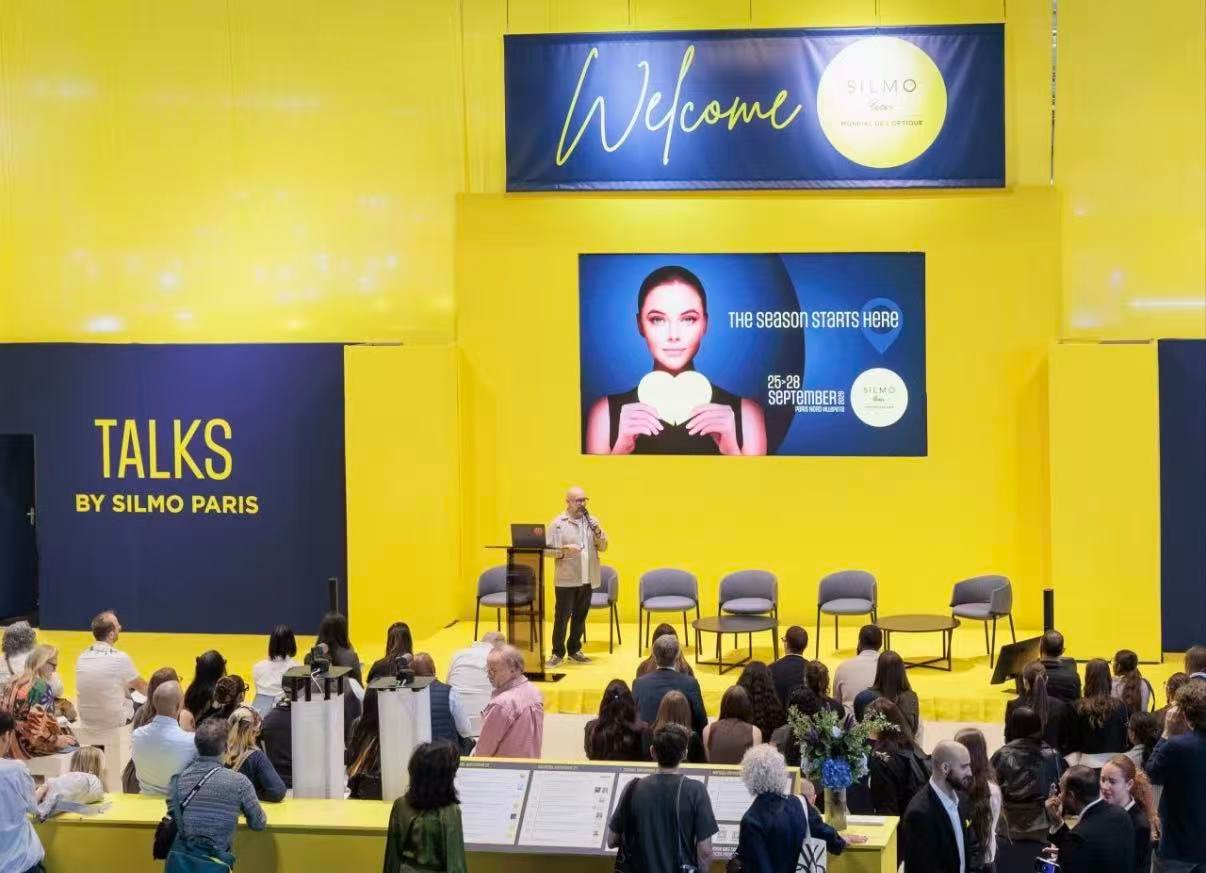
SILMO Paris 2026 is taking place from September 25–28 at Paris Nord Villepinte, bringing together eyewear brands, designers, manufacturers, technology companies and optical professionals from around the world.
The official SILMO Trends Forum highlights a season where individuality is expressed through shape, material, colour and increasingly considered details. At the same time, SILMO Next is giving greater attention to smart glasses, artificial intelligence and the technologies that may reshape the optical industry.
But from a manufacturing perspective, one change stands out:
Some of the most interesting eyewear design is no longer happening only in the outline of the frame. It is happening inside the material, around the hinge, within the temple and through the way different components are engineered together.
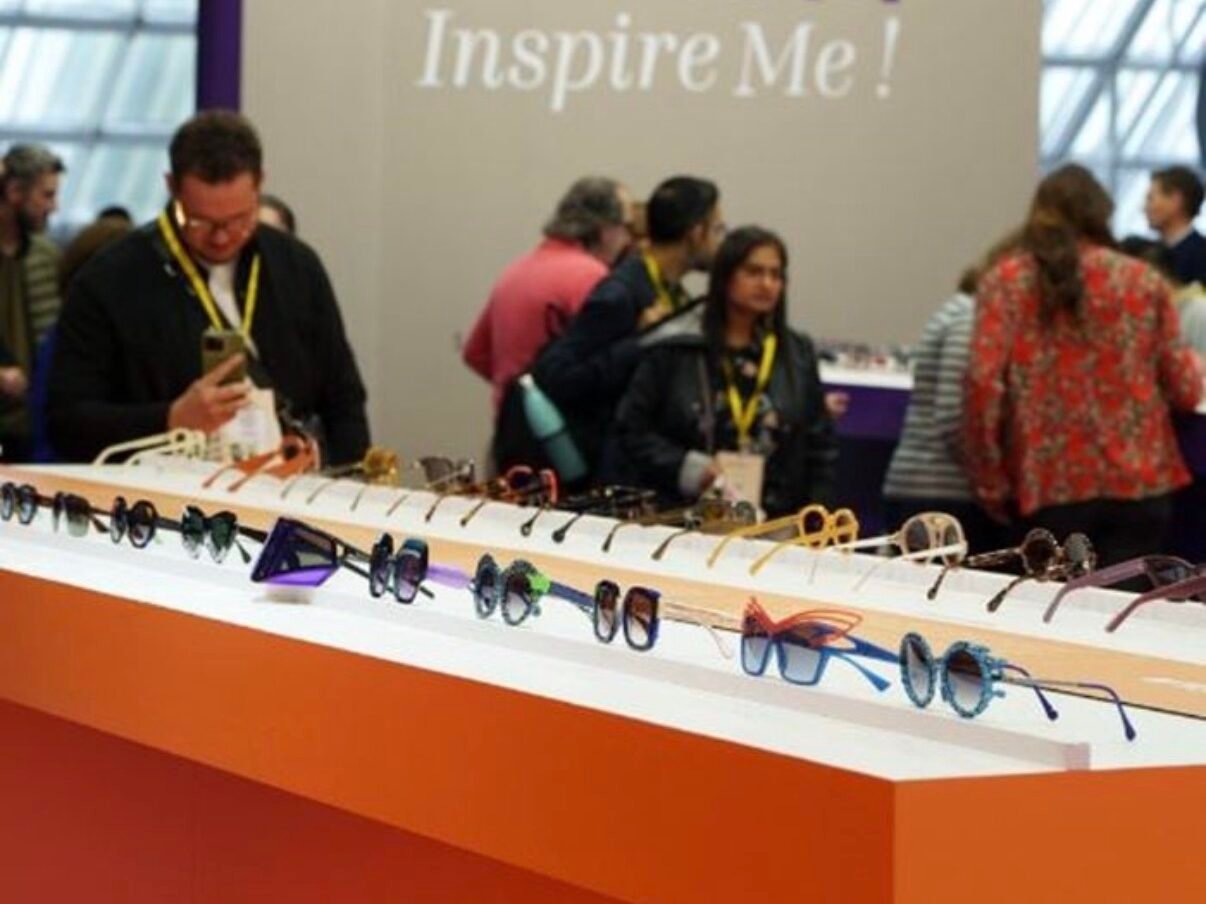
Here are four eyewear manufacturing trends we are watching around SILMO Paris 2026.
1. Sculptural Acetate: Designing With Depth, Not Just Colour
Acetate continues to be one of the most important materials in premium independent eyewear.
What is changing is how brands use it.
For a long time, differentiation often started with choosing a distinctive acetate colour or pattern.
Today, there is increasing potential to create identity through the depth and construction of the material itself.
That can include:
- Deep bevels
- Layered acetate
- Transparent and translucent sections
- Contrasting laminations
- Sculpted front profiles
- Different thicknesses across one frame
- CNC surface relief
- Colour revealed through different machining depths
This changes the design question.
Instead of asking only:
“Which acetate colour should we use?”
a brand can also ask:
“What could we reveal inside the material?”
For manufacturers, this type of design requires much more than cutting a frame to shape.
The relationship between CNC machining, lamination, polishing, dimensional stability and final surface finishing becomes part of the aesthetic itself.
A deep-cut detail may look strong in a rendering but lose definition after polishing.
A laminated colour transition may look simple visually but require accurate material positioning before machining.
A highly sculpted front may need several machining angles to maintain the intended geometry.
This is where manufacturing knowledge begins to influence design quality.
From equipment to design capability
For an eyewear brand, knowing that a factory has CNC machines is not particularly meaningful on its own.
What matters is what those machines can help achieve.
For example:
Different milling depths can become part of the colour design.
A bevel can change the visual weight of the frame.
A layered acetate construction can create depth without adding an external decoration.
That is a much more interesting conversation than simply asking how many CNC machines a supplier owns.
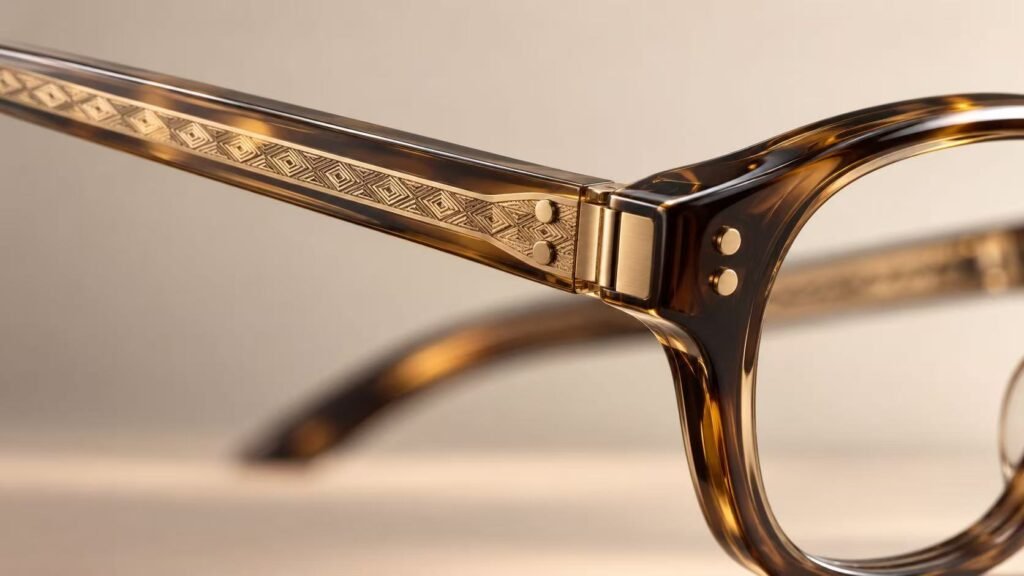
2. The Next Brand Signature May Not Be a Logo
One of the strongest directions we are watching is the growing importance of small construction details.
The SILMO d’Or 2026 nominees themselves include innovations based around hinge systems, modular eyewear and new frame constructions, showing how engineering details are increasingly becoming part of the product story rather than remaining invisible technical components.
This opens an important opportunity for independent eyewear brands.
A recognizable product does not always need a large logo on the temple.
Brand identity can also be built through:
- A custom core-wire pattern
- A distinctive rivet
- A particular hinge shape
- A repeated engraved motif
- A metal insert
- A temple-tip detail
- A hidden message
- A recognizable material transition
The difference may be subtle.
But when the same detail appears consistently across a collection, it can gradually become part of the brand’s visual language.
Brand DNA can move into construction
Imagine a fashion or jewellery brand entering eyewear.
Instead of simply placing its existing logo on a frame, a more interesting approach could be to take something already associated with the brand — a jewellery curve, textile pattern, buckle, stitch or geometric symbol — and translate it into an eyewear component.
That motif might become:
a core-wire pattern,
a rivet arrangement,
a hinge detail,
an engraved temple element,
or a CNC feature.
This creates a different type of customization.
It is not only:
“Put my logo on this frame.”
It becomes:
“Make the construction feel like our brand.”
For independent brands trying to build recognizable products without excessive external branding, this could become increasingly important.
3. Modular and Smart Eyewear Are Bringing Engineering Back to the Forefront
Smart eyewear continues to occupy more space within the optical industry.
SILMO Next 2026 includes smart-glasses demonstrations, artificial intelligence, new digital experiences and discussions around the practical adoption of connected eyewear. SILMO also now has a dedicated Smart Eyewear category within the SILMO d’Or awards.
But one development is particularly relevant to traditional eyewear manufacturers:
Smart glasses are increasingly expected to behave like normal eyewear.
Weight matters.
Fit matters.
Prescription compatibility matters.
Temple thickness matters.
Balance matters.
And design matters.
One AI+AR product shown in the SILMO catalogue highlights a weight below 40 grams, illustrating how lightweight engineering is becoming a visible part of smart-eyewear competition.
Meanwhile, systems such as Solos AirGo V2 use modular frame architecture with interchangeable fronts, prescription-lens compatibility and Asian-fit options.
These developments suggest an important shift.
Smart eyewear does not necessarily need to be designed as one fixed electronic product.
The electronic platform and the eyewear structure can increasingly become separate design layers.
That creates possibilities for:
one electronics platform + multiple frame fronts + different fits + different colours + different market positioning.
Where traditional eyewear engineering matters
Technology companies may develop the AI, software, camera, speaker or electronics platform.
But somebody still needs to turn those components into eyewear that can be worn comfortably for hours.
That means solving:
- Front-frame geometry
- Temple architecture
- Component space
- Hinge durability
- Weight distribution
- Left-right balance
- Ergonomic curvature
- Rx compatibility
- Assembly
- Surface finishing
For this reason, we believe traditional eyewear engineering will remain highly relevant as smart eyewear develops.
The challenge is not simply:
“How much technology can we fit inside?”
A better question may be:
“How little should the wearer feel that the technology is there?”
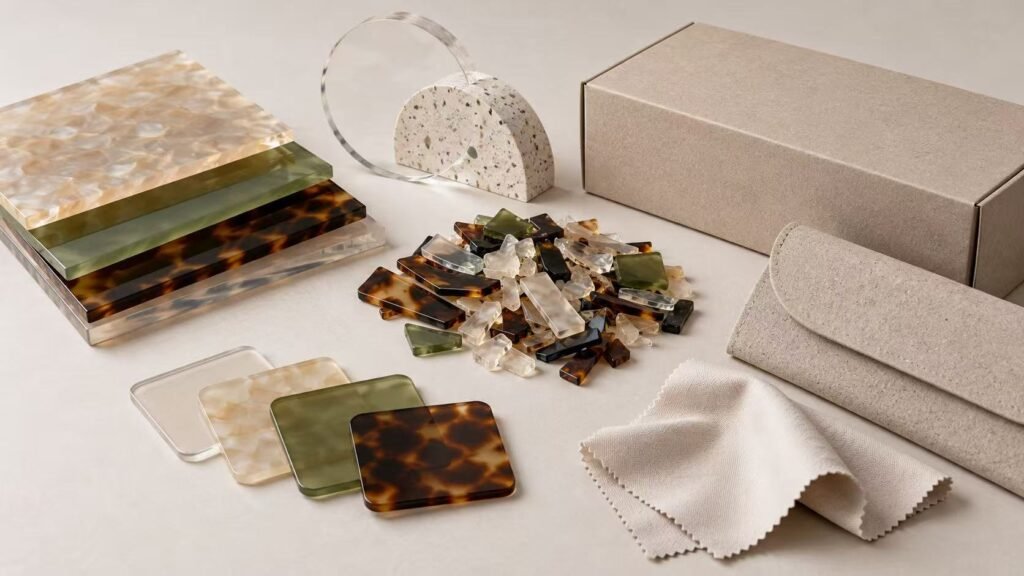
4. Sustainability Is Becoming More Specific
Sustainability remains an important industry topic, but the discussion is becoming more practical.
SILMO’s Responsible Company Prize evaluates areas including environmental initiatives, responsible purchasing, product design and lifecycle, working conditions and governance. The 2026 finalists include examples such as renewed acetate, recycled-content materials, production-offcut reuse, longer product lifecycles and changes to packaging.
This is an important shift.
For eyewear brands, sustainability is moving beyond a simple question such as:
“Do you have an eco-friendly material?”
More practical questions may include:
- Where does the material come from?
- Is recycled content documented?
- Can manufacturing offcuts be reused?
- Can unnecessary plastic packaging be reduced?
- Can components be repaired or replaced?
- Can the product lifecycle be extended?
- What supporting documentation is available?
For manufacturers, this means sustainability increasingly involves process and documentation, not only material selection.
And not every improvement requires redesigning the entire frame.
Packaging can be a practical starting point.
A brand may choose:
Standard Packaging
or
Reduced-Plastic Packaging
using different pouches, cloths, bags or cartons.
Smaller changes that can be documented clearly may often be more credible than broad claims about being “green” or “eco-friendly.”
What Does This Mean for Independent Eyewear Brands?
Looking across these directions, one conclusion stands out:
Eyewear differentiation is becoming more detailed.
That does not necessarily mean frames need to become more complicated.
The next distinctive product might still have a relatively familiar silhouette.
Its identity may instead come from:
a core wire beneath transparent acetate,
a precisely controlled bevel,
a distinctive hinge,
a layered material transition,
a modular connection,
or a detail that is only noticed when someone holds the frame in their hand.
For growing independent eyewear brands, this also creates a useful product-development strategy.
More SKUs do not always require more completely different frame constructions.
A strong base design can potentially be extended through:
- Colour
- Material
- Lens options
- Optical and sun versions
- Surface finishing
- Core-wire design
- Metal details
- Accessories
- Size variations
For smaller brands, this can be a more manageable way to expand a collection while maintaining a recognizable design language.
From Design Intention to Manufacturable Detail
A manufacturer’s role is not simply to reproduce a drawing.
The more eyewear design moves into materials and construction, the more important it becomes to understand why a detail exists — and what will happen to it during production.
A beautiful laminated detail still needs stable positioning.
A decorative core wire still needs reliable temple construction.
A deep CNC feature needs to survive polishing without losing its definition.
A new hinge concept still needs consistent opening and closing.
A lightweight smart temple still needs enough strength around the electronics and connection points.
This is where design intention and manufacturing engineering meet.
At Cenming Eyewear, this is what we find most interesting about the developments surrounding SILMO Paris 2026:
not simply which shape or colour will become popular next, but how materials, construction and engineering can become part of a brand’s identity.
Because once a new eyewear idea leaves the screen, two questions remain:
Can it be made beautifully?
And can it be made consistently?
That is where manufacturing really begins.
FAQ
What eyewear trends are emerging around SILMO Paris 2026?
Key directions include more expressive use of materials and details, modular frame construction, growing smart-eyewear development and more specific approaches to sustainability.
Is acetate still important for premium eyewear?
Yes. Acetate remains highly relevant, but brands have more opportunities to differentiate it through layering, transparency, bevels, CNC machining, surface depth and contrasting material structures.
How can an independent eyewear brand create more recognizable products?
Brand identity does not have to depend only on logos or unusual frame shapes. Core wires, rivets, hinges, engravings, material transitions and other repeatable construction details can also become recognizable elements across a collection.
P.S.:This article reflects Cenming Eyewear’s observations of publicly available industry information and product developments surrounding SILMO Paris 2026. Referenced brands and products belong to their respective owners.